Green Roofs in South Yorkshire: Benefits, Types and Installation
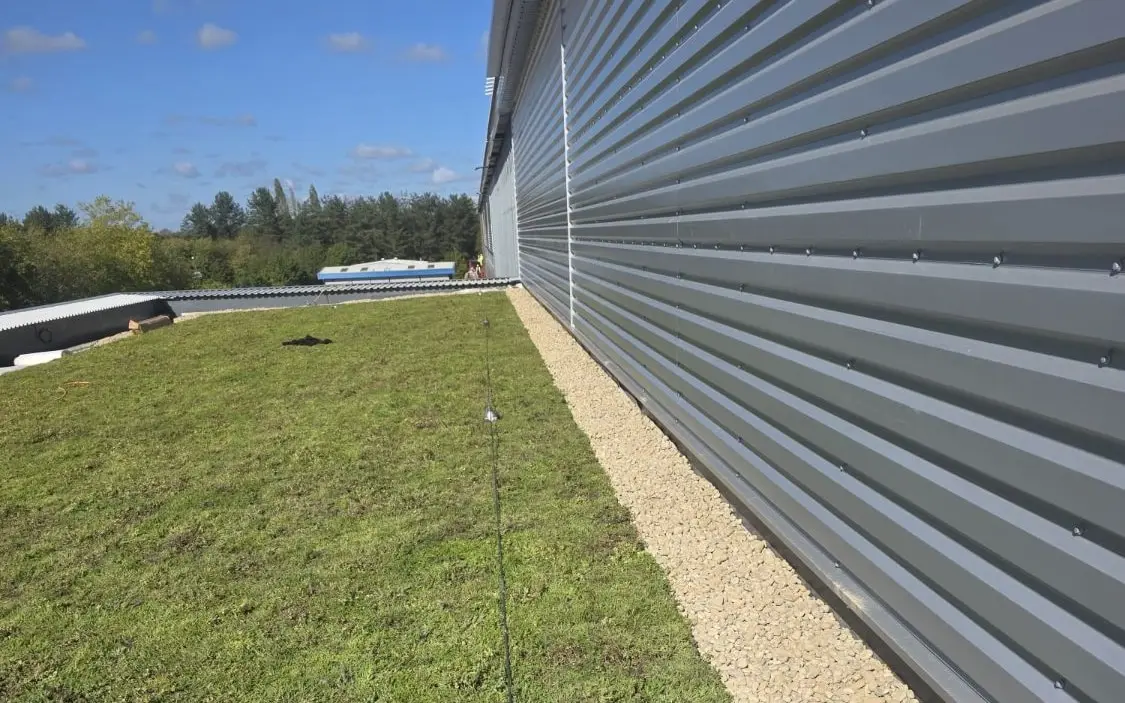
A flat roof doesn’t have to be a grey rectangle you’d rather not look at. A green roof covers it with living plants, usually hardy sedums or wildflowers, and in the right place it’s one of the best upgrades a flat roof can get. We install green roofs across South Yorkshire, on homes and commercial buildings alike. This guide is the honest version: what a green roof is, what it’s genuinely good for, and what has to be right before one goes on.
What is a green roof?
A green roof, sometimes called a living roof, is a planted layer built on top of a waterproofed flat roof. From the waterproofing up, a typical build-up looks like this:
- Root-resistant waterproofing. The membrane that keeps the building dry, and the most important layer of all.
- Protection and drainage layers. A tough protection mat, then a drainage board that holds a little water for the plants and lets the rest run off to the outlets.
- Filter fleece. This stops the growing medium washing down into the drainage.
- Growing medium. A lightweight, free-draining substrate made mostly from crushed mineral material such as brick or pumice. Not garden soil, which is too heavy and holds too much water.
- The plants. Usually a pre-grown sedum blanket, laid like turf so the roof is green from day one, or plug plants, which cost less but take a growing season or two to fill in.
The plants get the attention, but the waterproofing does the real work. Once a green roof is on, you can’t easily get at the membrane underneath, so it has to be right first time.
The main types of green roof
Sedum roofs
The most popular choice for homes. Sedums are low-growing succulents that store water in their leaves, so they cope with dry spells and cold winters on a shallow, lightweight build-up. They flower in summer and often turn red or bronze in winter, which is perfectly normal. For a garage, extension or garden room, this is usually the one to go for.
Wildflower and biodiverse roofs
A deeper growing layer, planted or seeded with native wildflowers and grasses. They’re brilliant for bees and butterflies and look spectacular in summer, but they’re heavier than sedum, look scruffier in winter and need cutting back once a year. Biodiverse roofs take the idea further, with varying depths of substrate, logs and stones to create habitat, and are sometimes a planning requirement on new developments.
Roof gardens
Also called intensive green roofs: deep soil, lawns, shrubs and even small trees, used like a garden. They’re heavy, need designing in from the start with a structural engineer, and need watering and regular gardening. You’ll mostly find them on commercial buildings and new builds rather than domestic extensions.
The benefits of a green roof
- It protects the waterproofing. Sunlight and big swings in temperature are what age a roof covering. Under a green roof the membrane is shaded, sheltered from frost and spared the daily cycle of expanding and contracting, so it avoids much of the wear an exposed roof takes.
- It slows rainwater down. A green roof soaks up a good share of the rain that lands on it and releases the rest gradually, easing the load on gutters and drains during heavy downpours. It’s one reason councils like to see them on new developments.
- It keeps the rooms below cooler. The plants shade the roof and cool it as moisture evaporates, which makes a real difference to garden rooms and extensions that bake under a dark roof in summer. The extra insulation in winter is modest, so a green roof is no substitute for proper insulation. Our warm roof vs cold roof guide explains how that should be done.
- It’s good for wildlife. Flowering sedums and wildflowers feed bees, butterflies and other pollinators, and give birds and insects somewhere to forage.
- It’s quieter. The growing layer absorbs sound, so rain on the roof and noise from outside are less noticeable, which is handy on a garden office.
- It looks better. Instead of looking down from an upstairs window onto felt or stone chippings, you see a living roof that ties an extension or garden room into the garden.
- It can help with planning. On new developments, a green roof can help meet planning requirements, including Biodiversity Net Gain.
What has to be right first
Green roofs are brilliant when they’re planned properly and an expensive headache when they’re not. Before anything goes on, these need to be right:
- The structure has to take the weight. A sedum roof typically adds 50–150 kg per square metre once it’s soaked through, a deeper wildflower roof more, and a roof garden several hundred. Whatever the size, the structure needs checking, and heavier systems need a structural engineer. Adding load to a roof can bring Building Regulations into play, and if your home is listed or in a conservation area, check with your local planning authority first.
- The waterproofing has to be sound and root resistant. Roots will find any weakness, so the membrane needs to be certified root resistant and in good condition. If your existing roof is old felt nearing the end of its life, replace it first. Lifting a green roof later to fix a leak costs far more than doing the job once, and our guide to the signs your flat roof needs replacing will help you judge.
- It should be tested before it’s covered. Once the green layer is on, the membrane is out of sight. We can electronically test a finished roof before the build-up goes on, confirming it’s watertight while it’s still easy to put right.
- The drainage needs planning. The outlets are fitted with inspection chambers so they can be checked and cleared, and a strip of gravel is left around the edges, outlets and rooflights. It keeps plants away from the details, gives you somewhere to step and acts as a fire break. A roof that already holds standing water needs its falls sorting before it can be planted.
- It needs a little looking after. A sedum roof needs a visit once or twice a year to pull out weeds and tree seedlings (sycamore and buddleia love a roof), clear the outlets and gravel strips, and give it a slow-release feed in spring. Wildflower roofs need an annual cut. It’s far less work than a garden, but it isn’t zero.
- It costs more than a standard roof. You’re paying for the waterproofing and the green roof on top, and the price depends on the size of the roof, access, the type of planting and whether anything underneath needs work first. Our cost guide explains what drives the price of the roof itself.
Why single ply suits green roofs
We’re single ply specialists, and it’s the waterproofing we’d choose to put under a green roof:
- Welded seams. PVC and TPO sheets are hot-air welded together, fusing them into one continuous layer with no glued joints for roots to work into.
- Root resistance. Several of the systems we install are designed specifically to sit beneath green roofs, with root-resistant membranes and matching drainage layers.
- Light weight. The membrane itself weighs very little, which leaves more of the roof’s capacity for the green roof.
- Long life. A correctly installed single ply membrane typically lasts 25 to 35 years out in the open, and under a green roof it’s protected from much of the weather.
There’s more on the options in our guide to single ply membrane systems, or see our single ply roofing service.
Where a green roof works best
At home, the best candidates are:
- Garages, particularly ones you can see from the house or garden. See the best flat roof for a garage.
- Single-storey extensions, especially ones overlooked by upstairs windows. See choosing a flat roof for an extension.
- Garden rooms and garden offices, where a cooler, quieter roof makes the biggest difference.
On commercial buildings, green roofs suit offices, schools and new developments, particularly where planning calls for them. They work on flat and gently sloping roofs; steeper slopes need extra restraint to stop the build-up slipping.
Green roofs installed across South Yorkshire
We’re based in Armthorpe and install green roofs right across South Yorkshire: in Doncaster, Rotherham and Barnsley, and in towns and villages including Bentley, Bessacarr, Thorne, Mexborough, Wath upon Dearne, Maltby, Wickersley and Wombwell. Our areas page has the full list.
Because we lay the waterproofing as well as the green roof, the most important part of the job is in the hands of flat roofing specialists, and you deal with one firm from the survey to the finished roof. Every job starts with a free survey. We look at the deck, the existing covering and the drainage, tell you honestly whether a green roof suits the building (and whether the structure needs an engineer to confirm it), and give you a fixed written quote.
Thinking about a green roof?
Whether it’s a sedum roof on a garden room or a green roof on a commercial building, we’ll give you a straight answer on what will work and what it will cost.
Request a free quote or call 07973 436 305.
Frequently asked questions
Do you install green roofs in South Yorkshire?
Yes. We install green roofs on homes and commercial buildings across South Yorkshire, including Doncaster, Rotherham, Barnsley, Mexborough, Thorne, Maltby, Wombwell and the towns in between. We lay the root-resistant single ply waterproofing as well as the green roof on top, so one firm is responsible for the whole roof.
Can my existing flat roof take a green roof?
It depends on two things. The structure has to carry the extra weight, which for a sedum roof is typically 50–150 kg per square metre once it is soaked, and the waterproofing underneath has to be sound and root resistant. If the existing covering is old felt, it usually makes sense to replace it first, because lifting a green roof later to fix a leak costs far more than doing the job once.
How much maintenance does a green roof need?
Less than a garden, but not none. A sedum roof needs a visit once or twice a year to pull out weeds and tree seedlings, clear the outlets and gravel strips, and give it a slow-release feed in spring. Wildflower roofs also need cutting back once a year, and a new roof may need watering during a long dry spell while it establishes.
How long does a green roof last?
A well-built, well-maintained green roof should last for decades. The planting renews itself, and the waterproofing underneath is shielded from the sunlight, frost and temperature swings that wear out an exposed roof. On an open roof, a correctly installed single ply membrane typically lasts 25 to 35 years.
How much does a green roof cost?
More than a standard flat roof, because you are paying for the waterproofing and the green roof layers on top. The price depends on the size of the roof, access, the type of planting and whether the structure or existing covering needs work first. We survey for free and give a fixed written quote.