Is Your Flat Roof Ready for Winter?
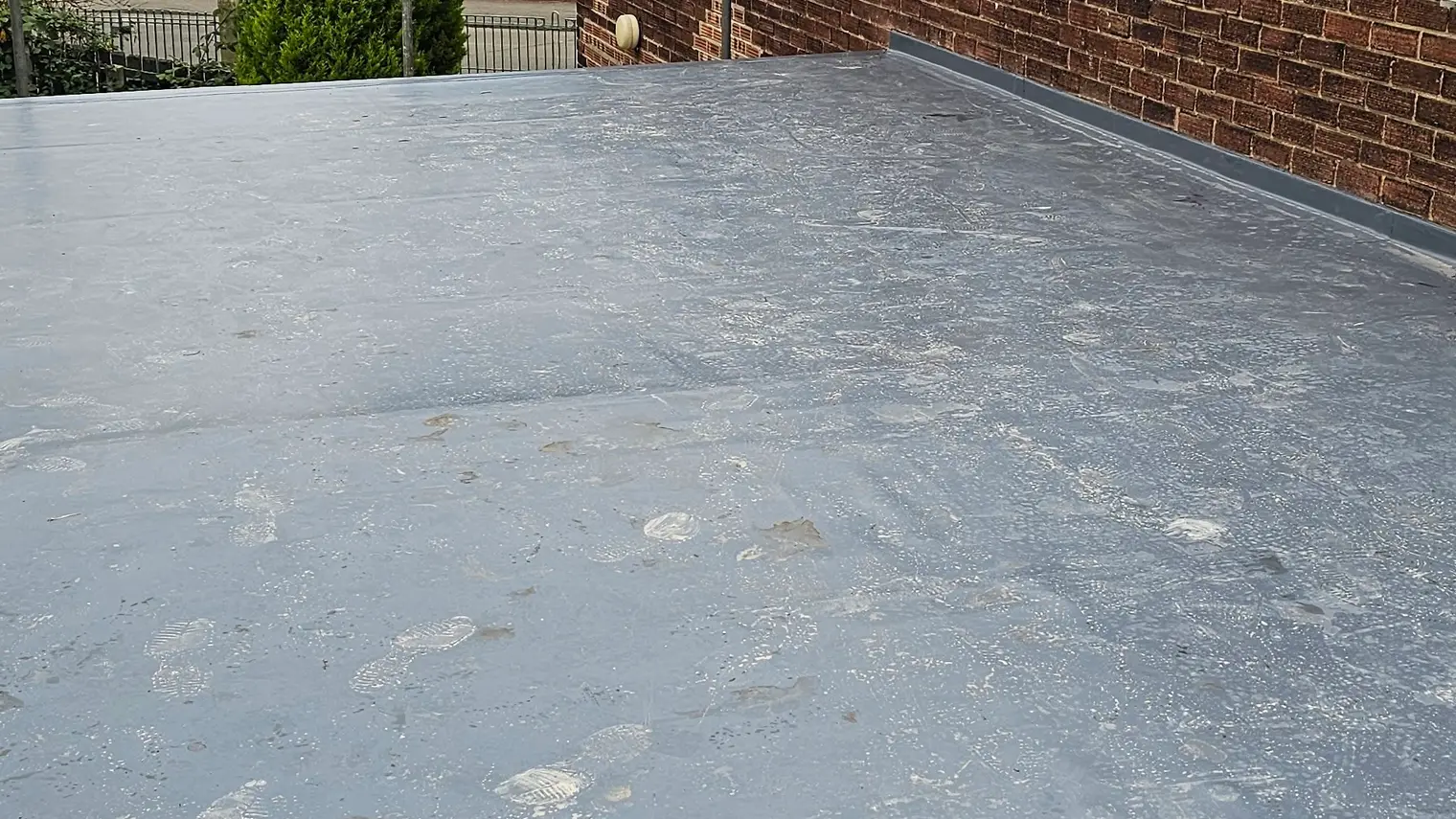
Winter is when flat roofs get found out. A small split that did no harm all summer starts letting water in with the first week of heavy rain, frost works a tired joint open a little further every night, and a blocked outlet turns melting snow into a pond. Most winter leaks start as something small that could have been spotted in autumn. Here’s how cold weather affects a flat roof, what to check before it arrives, and what to do if yours lets go mid-winter.
Get ready before the weather turns
Autumn is the best time to look at a flat roof. The leaves are coming down, there’s still enough daylight to see properly, and there’s time to sort any problems before the first hard frost. If you can see the roof safely from a window that overlooks it, or from a properly footed ladder at the edge without climbing on, check:
- Outlets, gutters and downpipes. Leaves and moss are the main cause of winter ponding. Clear them now, and again once the trees are bare.
- Overhanging branches. Trim anything that rubs on the roof or drops debris onto it before the winter winds arrive.
- Edges and trims. Look for lifting edges, loose trims or a gap where the roof meets the gutter.
- Upstands and flashings. Where the roof meets a wall, look for cracked cement fillets, slipped flashings or perished sealant.
- Standing water. If water is still sitting a couple of days after rain, the drainage needs attention before winter. Our guide to ponding water on a flat roof explains why.
Our flat roof maintenance checklist covers the year-round checks in more detail. If you’d rather someone else did it, a pre-winter roof inspection is a lot cheaper than drying out a ceiling in January.
Frost and the freeze-thaw cycle
Frost on its own doesn’t harm a sound roof. The damage comes from water that has already found its way into a crack or an open joint. When it freezes it expands and pushes the gap a little wider, then when it thaws, more water runs in. Repeat that over a run of frosty nights and a hairline crack becomes a leak.
Some roofs suffer far more than others:
- Felt goes stiff and brittle in the cold. Old felt cracks and its laps open up, which is why so many felt roofs fail in winter.
- Cement fillets at the wall junction crack with freeze-thaw and let water in behind the upstand.
- GRP has a rigid surface, so as the deck moves with the temperature, hairline cracks can open at joints and edges.
- EPDM rubber stays flexible, but its glued seams and bonded details are where water gets in, and freeze-thaw works on any that have started to lift.
- Welded single ply stays flexible at low temperatures and has no glued laps for water to work into, so freeze-thaw has very little to grip. It’s one of the reasons we fit it. See how it compares in single ply vs felt.
Snow on a flat roof
A flat roof that’s in good condition and built to modern standards is designed to carry normal snowfall, so a covering of snow isn’t a reason to panic. The risks are elsewhere:
- Meltwater with nowhere to go. If an outlet or gutter is frozen or blocked, melting snow ponds on the roof and sits against every joint and upstand. Outlets cleared in autumn mean far fewer problems in a thaw.
- Drifts. Wind piles snow against walls, parapets and higher roofs. A deep drift is much heavier than an even covering, and it holds water against the upstand as it melts.
- Older or sagging roofs. If a roof already dips between the joists, or the ceiling below has cracked or bowed, get it looked at before heavy snow, not during it.
What not to do: don’t climb onto a snowy or icy roof, don’t shovel it, because a shovel blade can cut the membrane, and don’t throw grit or rock salt on it. Grit damages the surface underfoot and washes straight into the outlets. If you’re worried about the weight of snow, call us instead.
Winter storms and wind
Winter storms rarely break a flat roof in the middle. They work on the edges. Wind lifts loose trims, catches the edge of a tired felt lap or a lifting seam, and drops branches and debris that can puncture the covering or block an outlet.
After a big storm, have a look from the ground or from a window. Lifted edges, loose trims, membrane flapping in the wind or debris lying on the roof are all worth a call. Don’t go up in high winds. We can make it safe and repair it properly once the weather allows.
Is it a leak, or condensation?
Not every winter drip is a leak. If water appears on cold, frosty mornings, often when it hasn’t rained at all, condensation is the likely cause. In a cold roof, where the insulation sits between the joists below the deck, warm, moist air from the room below reaches the cold underside of the deck, condenses and drips back down. It can look exactly like a leak, and patching the roof won’t stop it.
Clues that point to condensation:
- Damp or drips after cold, clear nights rather than after rain
- Damp or mould spread across the ceiling rather than one wet patch
- Worse in rooms that produce a lot of moisture, such as kitchens and bathrooms
The lasting fix is usually to upgrade to a warm roof, with the insulation above the deck so it never gets cold enough for condensation to form. We explain the difference in warm roof vs cold roof. If you can’t tell which you’re dealing with, electronic leak detection shows whether the membrane is actually breached.
If your flat roof leaks this winter
- Catch the water. Put down buckets and towels, and move anything valuable out of the way.
- Keep safe around electrics. If water is coming through near a light fitting or socket, switch that circuit off at the consumer unit and leave it off until it’s been checked.
- Take photos. Pictures of the ceiling, the water and any visible damage help if you need to make an insurance claim.
- Stay off the roof. A wet or icy flat roof is slippery, and walking on it can make a weak spot worse.
- Call a flat roofer. We prioritise active leaks and can carry out a temporary make-safe where needed, then a proper repair. Our guide to why flat roofs leak covers the usual causes.
Can a flat roof be replaced in winter?
Yes, with the right system. Single ply seams are hot-air welded, fusing the membrane into one continuous sheet, so there’s no resin to cure and the welds don’t depend on warm weather. That makes it well suited to winter work.
What stops a winter job is wet rather than cold. The deck has to be dry, so rain, snow, frost or ice on the roof means waiting. Winter work is planned around the forecast, and a roof should only ever be stripped as far as it can be made watertight before the end of the day. With shorter days, a job can take a little longer than it would in summer.
Other systems find winter harder. GRP resin and the contact adhesives used on EPDM both need the right temperature and dry conditions to cure, so a cold, damp spell can hold them up for days.
If your roof is already showing the signs it needs replacing, it’s far better to replace it on your terms in a dry spell than in a hurry after a storm. A survey now means you know where you stand before the worst of the weather.
Winter flat roofing across South Yorkshire
We repair, inspect and replace flat roofs right through the winter across Doncaster, Rotherham, Barnsley and the surrounding towns, from Thorne and Armthorpe to Mexborough and Maltby. Whether it’s a pre-winter check, a leak that needs sorting now or a replacement planned for a dry spell, we’ll give you honest advice on what your roof actually needs. See all the areas we cover.
Request a free quote or call 07973 436 305.
Frequently asked questions
Can a flat roof be replaced in winter?
Yes, with the right system. Single ply seams are hot-air welded rather than glued, so there’s nothing to cure and the cold doesn’t stop the work. What does stop it is rain, snow, frost or ice on the deck, so winter jobs are planned around dry spells, and a roof should only ever be stripped as far as it can be made watertight the same day.
Should I clear snow off my flat roof?
Usually not. A sound flat roof built to modern standards is designed to carry normal snowfall, and climbing onto an icy roof is far more dangerous than the snow. A shovel can also cut the membrane. If you’re worried about a deep drift, or the roof was already sagging, call us rather than going up yourself.
Why does my flat roof only drip when it’s cold?
Drips on cold, frosty mornings, especially when it hasn’t rained, usually point to condensation rather than a leak. In a cold roof, warm, moist air from the room below condenses on the cold deck and drips back down. The lasting fix is usually to upgrade to a warm roof, with the insulation above the deck.
Do you carry out winter flat roof repairs in Doncaster?
Yes. We repair, inspect and replace flat roofs right through the winter across Doncaster, Rotherham, Barnsley and the surrounding South Yorkshire towns, and we prioritise active leaks. Call 07973 436 305 and we’ll advise on the quickest safe fix.